

Table of Contents
Introduction
It usually hits when you least expect it.
Have you ever been in situation when your lecture ends around 3 PM, and your head is already full. You’re thinking about the assignment you didn’t finish, the quiz coming up, the message you haven’t replied to, and whether you’re falling behind compared to everyone else. You sit down to study, but your brain won’t cooperate.
This isn’t laziness. It’s mental overload.
Micro-journaling isn’t about becoming a writer or adding another habit to your routine. It’s the opposite. Think of it as control-alt-delete for your brain, a fast reset that clears the background noise so you can focus on what actually matters.
No long entries. No perfection. Just getting what’s stuck in your head out.
1) Why Your Brain Needs a “Dump Button”
The cognitive overload problem
College constantly forces your brain to switch contexts. One minute you’re listening to a lecture, the next you’re thinking about deadlines, social situations, or something you said that felt awkward.
This constant switching fragments attention. Focus becomes shallow, and even simple tasks feel heavy. Micro-journaling works because it offloads thoughts instead of forcing you to juggle them mentally.
The emotional hijack
Anxiety before a presentation. Frustration with a group project. Panic after an exam.
Strong emotions can quietly take over your thinking without you realizing it. Writing down a single line like “I’m anxious about presenting because I don’t feel prepared” helps you name the emotion and naming it reduces its control.
You’re not solving the problem yet. You’re just taking back mental control.
The memory illusion
Most students believe they’ll remember:
- that good essay idea
- feedback from a professor
- something important they noticed
They won’t.
Micro-journaling becomes your external memory. Anything fragile or important gets captured immediately instead of being lost under stress.

2) The Student’s Micro Journaling Toolkit
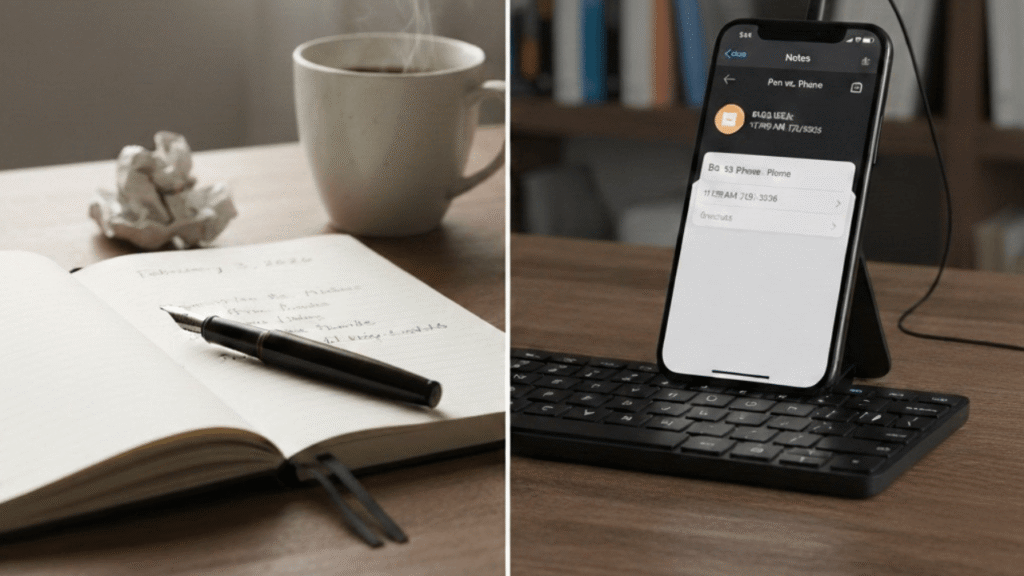
You don’t need a fancy journal. You need speed and accessibility.
Simple analog options
- Index cards + binder clip
Small, discreet, and easy to carry. One sentence is enough. - Planner margin method
Writing short notes next to your schedule adds instant context:
“After Econ lecture — supply curves still confusing.”
Digital options that actually work
- Voice memos
Useful when emotions hit while walking across campus. Label them simply:#idea,#stress,#exam. - A dedicated notes app
Keep micro-journals separate from class notes. A home-screen widget or shortcut matters more than the app itself.
The rule is simple:
If it takes more than two taps to capture a thought, you won’t use it.
The missing piece: Weekly processing
This is what turns journaling into a system.
Once a week (Sunday night works well), spend 15 minutes doing three things:
- Read your entries
- Notice repeats stressors, ideas, patterns
- Decide:
- Does this need action?
- Reflection?
- Or can I let it go?
Without this step, journaling becomes a storage bin for stress. With it, it becomes insight.
3) 10 Micro-Journaling Prompts Built for Campus Life
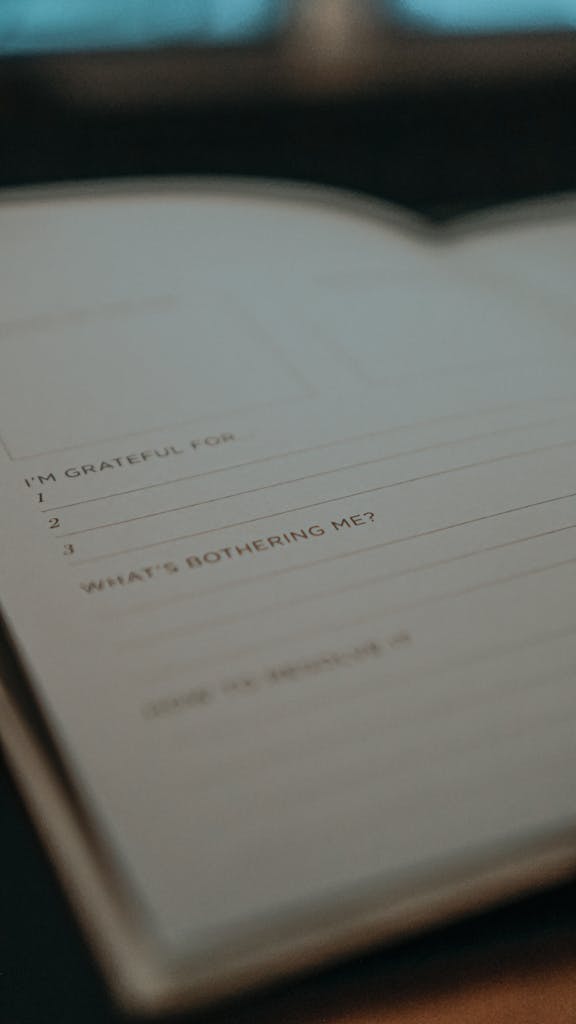
These are designed for real student situations, not abstract reflection.
- Before class anxiety
One thing I’m worried about today is… One thing I’m curious about is… - After an exam
The question that threw me off was… What I actually knew was… - Group project frustration
My role feels… One boundary I need to set is… - Procrastination block
I’m avoiding starting because… The smallest next step is… - Social exhaustion
An interaction that drained me was… One that energized me was… - Future panic
The “what if” stuck in my head is… One fact grounding me right now is… - Motivation loss
The reason studying feels heavy is… The original reason I started was… - Body stress check
I feel tension in my… I can release it by… - Small win log
Today, I handled… competently. - Permission slip
Today, I give myself permission to…
One sentence is enough. More is optional.
4) From Scattered Thoughts to Strategic Insight
This is where micro-journaling pays off.
Spot patterns
After two weeks, you’ll notice repeats. Certain classes. Certain people. Certain times of day. These patterns reveal what’s actually draining or motivating you.
Advocate for yourself
A note like “Always confused after Chemistry lecture” isn’t complaining it’s data. Use it to ask better questions, seek help, or change how you study.
Turn stress into material
Those raw thoughts from long nights often become the strongest material for reflective essays, personal statements, or even blog posts. Authentic insight comes from captured experience, not memory.
Conclusion
Micro-journaling is one of the lowest-effort, highest-return habits you can build in college.
It’s not another task. It’s the tool that makes everything else feel lighter studying, planning, even resting. When your thoughts aren’t competing for attention, focus becomes easier.
You don’t need motivation to start.
Open your app.
Set a 60-second timer.
Finish this sentence:
“Right now, the main noise in my head is…”
Clear the noise. Reclaim your focus.