

Introduction: From High School Struggles to a Better System
The last year of high school is still fresh in my mind.
The constant pressure to score well, the stress around exams, and the daily struggle to manage time properly. I wasn’t the top student in my class, but I wanted to improve. More than anything, I wanted to break the belief I had carried for years, that I simply wasn’t capable of getting good grades.
So I started experimenting.
I researched different study methods, tested them one by one, and adjusted what didn’t work. I became genuinely obsessed with understanding why some approaches helped me focus while others failed completely. Slowly, things began to change.
Those efforts paid off. By the end of my finals, I had secured an A something I once thought was out of reach.
Now that I’m in college, I’ve refined those same techniques. They’re no longer random tips I try occasionally. They’ve become my go-to system practical, repeatable, and effective.
This post isn’t about studying longer hours or pushing yourself to exhaustion. It’s about studying smarter, using a system that makes your time count. With the right approach, you can learn more in six focused hours than most people do in ten distracted ones.
What follows is the framework that helped me make that shift broken down into simple, manageable parts you can apply one step at a time.

1) Schedule
Most people think time management is about finding more hours in the day.
Well let me tell you, It isn’t.
The real difference between average students and high performers is not effort it’s how their time is designed. Instead of relying on motivation or willpower, they create a schedule that makes focus almost automatic.
This strategy is about doing exactly that: architecting your focus, not forcing it.
The core idea: Focus Sprints
One common mistake is using the same study timing for every task. Not all work requires the same level of mental energy, and your brain doesn’t operate in one fixed mode.
That’s where Focus Sprints come in.
A Focus Sprint is a specific block of time matched to a specific type of mental work. When the task and the time block align, studying feels lighter and more efficient.
Here are the three sprint types that work best.
The 25-minute Review Sprint
This sprint is short, intense, and ideal for repetition-based tasks.
Use it for:
- Flashcards
- Reviewing notes
- Memorizing formulas or definitions
Because the session is brief, your focus stays sharp. You work hard for 25 minutes, then step away before fatigue sets in.
The 50-minute Deep Work Sprint
This is your most important sprint.
It’s designed for work that requires real concentration, such as:
- Writing assignments
- Solving complex problems
- Reading dense or technical material
This sprint gives your brain enough time to settle into focus without pushing it too far. A short break afterward helps reset your attention so you can return fresh.
The 90-minute Creative Build Sprint
Some tasks require more than focus, they require momentum.
This longer sprint is best for:
- Projects
- Coding
- Creating outlines
- Synthesizing ideas
It’s based on the natural rhythm of mental energy. After a sprint like this, a longer break is essential to avoid burnout.
How to apply this in real life
Having sprint types is helpful, but the real impact comes from planning them intentionally.
Start with a simple weekly reset.
Once a week, look at your schedule and block out:
- Classes
- Work
- Fixed commitments
Then, schedule your Focus Sprints around them. Treat these blocks like real appointments, not optional study time.
Next, match the task to the sprint.
Light review does not need long sessions. Deep writing does. When the sprint fits the task, you finish more with less resistance.
Finally, protect your peace with a buffer.
Add a short buffer block at the end of your study day. Use it for unfinished tasks, organizing notes, or clearing small to-dos. This prevents mental clutter from carrying into the next day.
Tools that make this easier
You don’t need complicated software.
A digital calendar with color-coded blocks helps you see your week clearly. For timing sprints, a simple Pomodoro-style app works well, especially one that lets you adjust session lengths.
If you prefer paper, a time-blocking planner can be just as effective. Planning your day before it starts creates clarity and removes decision fatigue.
The mindset shift
The real change happens when you stop asking:
“When will I study?”
and start asking:
“What type of focus does this task need, and where is it scheduled?”
That shift turns studying from a daily struggle into a structured process. You’re no longer reacting to your workload you’re directing it.
This is what it means to architect your focus.

2) Space
Willpower is limited.
Every small distraction around you a messy desk, constant notifications, poor lighting quietly drains it. When your environment works against you, staying focused becomes a daily struggle.
This pillar is not about finding a random place to study. It’s about designing a space where focus becomes the default, not something you have to fight for.
The core idea: The Trinity of a Productive Space
Your study environment has three layers. All three matter, and ignoring one weakens the others.
- Physical – what your body interacts with
- Digital – what your devices are doing
- Social – the presence (or absence) of others
When these layers work together, concentration feels natural. Let’s go through them one by one.
1. The Physical Layer: Support Your Brain
Your brain is affected by its surroundings more than most people realize. This isn’t about comfort it’s about performance.
Light matters.
Natural light helps you stay alert. If possible, study near a window during the day. In the evening, use a soft desk lamp that lights your workspace without shining directly into your eyes. This reduces eye strain and helps you stay focused longer.
Air matters.
Stale air makes you tired faster. Even cracking a window slightly can improve airflow and mental clarity. If you’re studying for long sessions, fresh air makes a noticeable difference.
Clutter matters.
A messy desk creates mental noise. Before starting a study session, take one minute to clear anything unrelated to the task you’re about to do. Not moving things around putting them away properly. A clear desk helps your mind settle.
2. The Digital Layer: Reduce Invisible Distractions
Most distractions today don’t come from the room they come from screens.
Instead of relying on self-control, remove temptation in advance.
Turn on focus modes that silence notifications during study sessions. Close apps and websites you don’t need. If you’re writing or reading, keep only what’s essential open.
A helpful rule here is simple:
One main task, one main screen.
When your digital space is quiet, your brain doesn’t have to constantly decide what to ignore.
3. The Social Layer: Use Accountability Wisely
Studying alone can sometimes lead to procrastination. Studying with others can be distracting. The solution isn’t isolation or group work it’s controlled accountability.
Virtual study rooms or silent study sessions work well because they provide presence without interruption. Knowing others are focused at the same time makes it easier to start and stick with your work.
If you live with roommates or family, a clear signal helps. A small sign, headphones, or a visible cue that means “I’m in a study session” reduces interruptions without repeated explanations.
A simple habit: The 5-minute space check
Before starting any focused study session, do a quick check:
- Is my desk clear and well-lit?
- Are notifications off and distractions blocked?
- Is my study signal or accountability setup active?
Five minutes of preparation can save hours of broken focus.
The mindset shift
Instead of asking:
“Why can’t I focus here?”
You start asking:
“How can I shape this space to support focus?”
When your environment is designed with intention, studying stops feeling like resistance. Your space begins working with you, not against you.

3) Self
Your study schedule and environment matter but they only work if you are functioning well.
Your body and mind are the most important tools in this entire system. If they’re run down, no study technique can compensate. This pillar moves past vague “self-care” and focuses on something more practical: maintaining the basics that make learning possible.
Think of it this way: complex learning requires a system that’s rested, fueled, and directed.
The core idea: The Cognitive Trinity
To perform consistently, three areas need attention:
- Sleep – how your brain recovers and stores information
- Nutrition & hydration – how your brain stays energized
- Mindset & goals – how your effort stays focused and meaningful
Ignoring even one of these makes studying harder than it needs to be.
1. Sleep: Protect Your Recovery Time
Sleep is not wasted time. It’s when your brain processes what you studied during the day.
Research consistently shows that memory formation happens during sleep. When sleep is short or irregular, focus drops and recall suffers even if you studied longer.
Instead of seeing sleep as optional, treat it as part of your study routine.
Aiming for 7–8 hours isn’t about comfort. It’s about making sure what you learned actually sticks.
A simple habit that helps is creating a short wind-down routine. Try stopping intense studying and screens about an hour before bed. Use that time to relax, listen to calming audio, or lightly plan the next day. This signals your brain that it’s time to slow down.
Tracking sleep can also be useful not to obsess, but to notice patterns. If late-night studying or caffeine affects your rest, that information helps you adjust your schedule.
2. Nutrition and Hydration: Keep Your Energy Stable
Your brain uses a lot of energy. When it’s under-fueled or dehydrated, concentration drops quickly.
Hydration is one of the simplest fixes. Even mild dehydration can reduce attention and memory. Keeping water on your desk and sipping regularly removes the need to remember it.
Food choices matter too, especially during long study days. Big sugar spikes can lead to crashes. Instead, choosing snacks with protein or healthy fats helps keep energy steady things like nuts, yogurt, eggs, or fruit.
Caffeine can help, but timing matters. Drinking it too late can interfere with sleep, which then affects focus the next day. A good rule is to stop caffeine several hours before bedtime.
3. Mindset and Goals: Give Your Effort Direction
Even with good sleep and energy, studying feels heavy when there’s no clear reason behind it.
Goals give your effort direction. Start simple:
- What do you want from this semester?
- Which subject matters most right now?
- Why does it matter to you?
Going one level deeper helps. When you connect daily study sessions to a longer-term reason progress, opportunities, or personal growth studying feels less like pressure and more like purpose.
It also helps to plan for difficult moments. Instead of vague motivation, decide in advance how you’ll respond when focus drops. Small, practical plans reduce stress when challenges show up.
A simple daily check-in
You don’t need perfection. You need consistency.
Each day, ask yourself:
- Did I protect my sleep?
- Did I fuel my body and stay hydrated?
- Did I remember why I’m putting in the effort today?
When these basics are in place, studying becomes more manageable.
Sleep, food, and mindset are not separate from studying. They are the foundation that supports it.
Once you treat yourself as part of the system not something to push through your focus improves naturally, and progress becomes more sustainable.
4) Systems
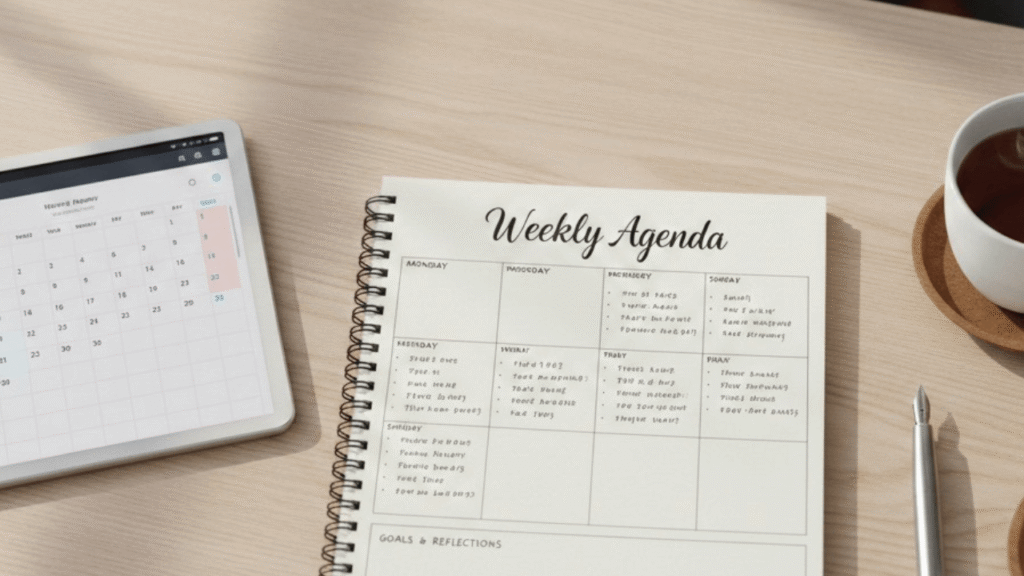
By this point, you’ve set up your schedule, your space, and your personal habits.
But none of that lasts without one final piece: systems.
Motivation fades. Busy weeks happen. A good system is what keeps things running even when energy is low. Instead of constantly deciding what to do next, systems quietly handle those decisions for you.
This pillar is about moving from effort to automation.
The core idea: Reduce friction before it appears
Most stress doesn’t come from having too much to do.
It comes from unanswered questions:
- What should I work on today?
- Where did I save that file?
- What’s coming up this week?
A good system answers these questions in advance. When friction is removed, focus becomes easier.
1. The weekly anchor: The Sunday Reset
This is the most important habit in the entire system.
Once a week, spend 30–45 minutes preparing for the days ahead. This single reset prevents chaos later.
Start with your calendar.
Block your study sessions and Focus Sprints first. Treat them like fixed appointments. Then fit classes, work, and social plans around them. This flips your week from reactive to intentional.
Next, prepare your environment.
Clear your desk, charge devices, and make sure focus modes or blockers are ready. A prepared space makes starting easier.
Then do a quick self-check.
Look ahead at the week. Are there late nights coming up? Busy days? Decide in advance how you’ll protect sleep, meals, and energy.
Finally, review your goals.
Pick one to three priorities for the week and make sure everything related to them notes, links, assignments is easy to access.
This reset keeps your entire system aligned.
2. The central hub: Your master dashboard
Scattered information creates mental overload. A master dashboard fixes that.
This doesn’t need to be complicated. It can be a single document, page, or notebook section that acts as your home base.
It should include:
- Your weekly schedule
- A short list of active projects for each class
- A place to dump random ideas or reminders
- Quick links to important resources
When everything lives in one place, you stop searching and start working.
3. Capture first, decide later
Ideas and tasks will pop into your head while studying. The mistake is stopping to deal with them immediately.
Instead, capture them quickly.
If something comes up an email to send, a task to remember write it down in your dashboard or notes in under ten seconds. Then return to what you were doing.
Later, during your weekly reset or a buffer block, you process that list. Decide what to delete, schedule, or act on. This keeps your mind clear without losing important thoughts.
A simple system check
Once a month, review your setup.
Ask yourself:
- What felt unnecessarily hard this month?
- Where did I procrastinate the most?
- What can I simplify or prepare in advance?
Small adjustments keep the system working for you instead of against you.
The final shift
At this stage, studying stops being something you “try” to do well.
You’re no longer reacting to deadlines or relying on motivation. You’re operating inside a structure that supports focus automatically.
With systems in place, progress feels calmer, more consistent, and far less stressful. You spend less time organizing your life and more time actually learning.
Conclusion
College doesn’t reward effort alone. Spending long hours without a plan often leads to stress, not results.
What makes the difference isn’t a single trick or shortcut it’s having a system that brings structure to your time, energy, and focus.
That’s what the 4-S College Success System is designed to do.
- You design your schedule instead of reacting to deadlines.
- You shape your space so focus feels natural, not forced.
- You take care of yourself so learning actually sticks.
- You build simple systems that keep everything running, even on busy weeks.
Together, these parts turn studying from a constant struggle into a manageable process you can rely on.
The goal isn’t to change everything overnight. That rarely works. Progress starts with one small decision.
Maybe it’s planning your week ahead of time.
Maybe it’s setting up one focused study session properly.
Maybe it’s protecting your sleep for a few nights in a row.
Small changes, applied consistently, compound faster than motivation ever will.
The difference between feeling overwhelmed and feeling in control isn’t intelligence or luck. It’s having a better structure in place. You now have that structure.
Start with one “S.” Build from there. Your next semester will thank you.